
The Power of AI Employees and the Challenge of Scaling Them
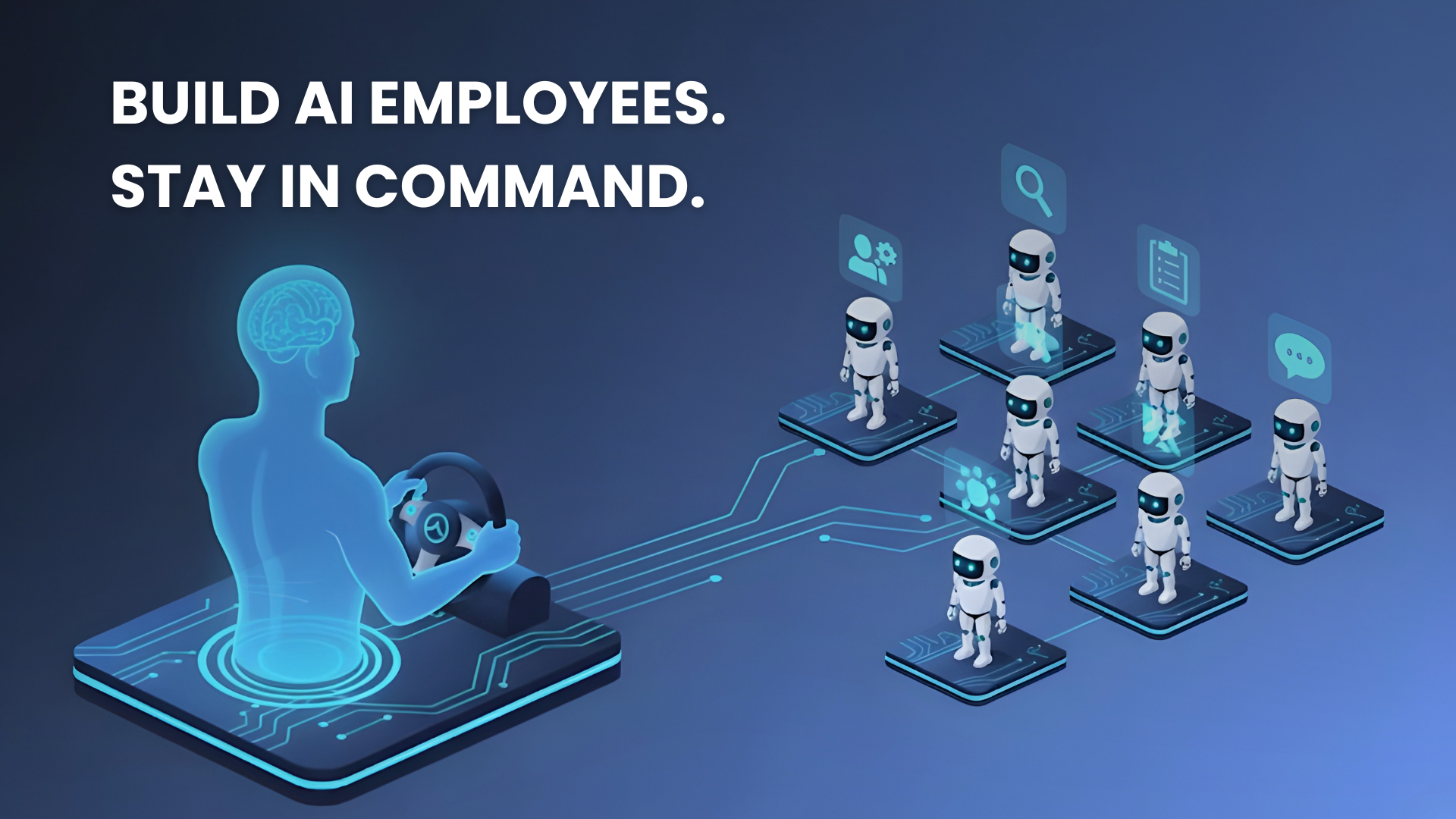
Imagine your business running like a well-oiled machine, with AI employees handling routine tasks, making decisions, and orchestrating operations across every department. Sounds like the future, right?
Well, the future is here. More and more companies are adopting AI Employees, integrating them into their workflows to automate processes, reduce costs, and boost productivity. But just like building a fleet of cars, you can't simply add more AI Employees and expect everything to run smoothly without a little management on your end.
The real question is: How do you scale your AI Employee fleet effectively without losing control of the wheel?
Let's be real: many businesses have rushed to deploy AI, only to find that their shiny new AI employees aren't living up to the hype. In fact, in many cases, companies have ended up creating more chaos than clarity.
Why? Because they haven’t set up the right frameworks and governance to manage these AI employees.
Here’s a glimpse of the problem:
If your business is going to rely on AI employees, you need a framework that keeps everything running in sync. That's where Human-in-Command comes in.
Rather than handing over control entirely to AI, the Human-in-Command (HiC) model places humans in the driver’s seat. In this structure, AI employees act as teammates, executing tasks, learning from human feedback, and adapting to real-world scenarios. Humans set the strategic direction, define policies, and review escalations while AI employees handle the operational tasks.
In other words, you’re the chauffeur, and your AI employees are the fleet of vehicles under your control, navigating the day-to-day grind. You manage the big decisions (the route), while they handle the execution.
1. Create a Unified Command Center for All Your AI Employee
A single AI Command Center is essential for managing a fleet of AI employees. This isn’t just a dashboard; it's your AI operations hub. The Command Center is where all your AI employees report, where you set business policies in natural language, and where you manage escalations and exceptions.
Why it matters:
Without a unified command center, your AI Employees may not understand the broader context of decisions being made across the organization. They might optimize their task without considering how it impacts other departments or systems.
With the Command Center, you have visibility across your AI Employees, enabling you to monitor performance, intervene when needed, and ensure that AI is acting within the boundaries you’ve defined.
2. Set Clear Policies and Ensure AI Employees Learn Over Time
Just like any employee, your AI Employees need to know what’s expected of them. But instead of issuing long employee handbooks, you can set business rules in natural language.
With the Human-in-Command framework, you can program policies directly into the AI system using everyday language (no coding required). These policies help your AI employees understand what they should do in specific situations, how to handle exceptions, and where they can make decisions.
The learning aspect is crucial here. Your AI Employees should evolve with every decision they make, learning from each interaction, adapting, and improving. For example, an AI Employee working in finance could learn to identify and flag fraudulent transactions by continuously reviewing past flagged incidents and adapting to new fraud tactics.
This ensures continuous improvement while preventing your AI employees from running into the same mistakes repeatedly. It’s not just about automation, it’s about evolving intelligence.
Scaling AI employees isn't just about adding more of them to the mix, it’s about making sure they can work together effectively.
In most enterprises, processes span multiple departments. For example, the Procure-to-Pay process involves finance, procurement, and sometimes HR. A single AI employee might not be enough to handle this cross-functional complexity.
This is where AI workforce orchestration becomes key. Think of it like an orchestra, you need AI managers (Orchestrators) to direct the efforts of various specialized AI employees working together across different functions.
For instance, an AI Employee in procurement may initiate the ordering process, but an AI employee in finance needs to verify the budget. An AI Employee in HR might need to ensure the vendor is on the approved list. By orchestrating the work of these AI Employees, you can ensure that tasks flow smoothly from one department to the next.
Scaling an AI Employee fleet can’t be done haphazardly. You need to ensure that the AI workforce is cohesive, strategic, and always under your governance. It’s not about letting go of control, it’s about empowering your human workforce with AI teammates who are constantly learning and improving.
By building a unified command center, setting clear natural language policies, and orchestrating cross-functional AI teams, you can ensure that your AI Employees work like well-trained teammates, not rogue agents running wild.
So, as you scale your AI Employee fleet, remember: you’re still the chauffeur, driving the strategy and ensuring everything stays on course. The fleet can grow, but the direction comes from you. It’s time to build your AI workforce for the future. Ready to take control
Want to see how your business can scale AI employees effectively? Book a demo with Supervity today and discover how our Human-in-Command AI platform can revolutionize your operations and create a seamlessly orchestrated workforce.




.webp)
